José Serebrier
| José | Serebrier |
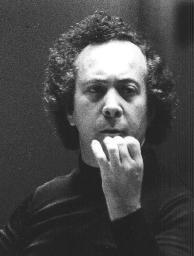
Warning: images may be copyrighted. If no copyright is shown, see their site of origin for details, or contact me.
Composition list
Chamber music
Symphonic music
Vocal music
Opera and lyrical music
Instrumental music
Concertante music
Sheet music for Jose Serebrier

Jose Serebrier - Suite — Jose Serebrier
Cello — — Classical
Solo Cello. Composed by Jose Serebrier (1938-). Peermusic Classical. Classical. 14 pages. Peermusic #70051-623. Published by Peermusic (HL.119646).
Price: $14.00

Jose Serebrier - Composer & Conductor — Jose Serebrier
— Hybrid SACD — Classical
Composed by Jose Serebrier (1938-). Classical, Contemporary Era. Classical. Hybrid SACD. Naxos #BIS-2423. Published by Naxos (NX.BIS-2423).
Price: $19.00

Bizet & Serebrier: Carmen Symphony — Barrett
— CD — Classical
By Barrett, Christopher, Gail, Gillespie, Jose, Kadala, Leslye, Lisa, McFarlane, Serebrier, and The President's Own United States Marine Band. By Alberto, Erich, Georges, Ginastera, Heitor, John Philip, Jose, Kleiber, Revueltas, Serebrier, Silvestre, Georges Bizet (1838-1875), John Philip Sousa (1854-1932), and Heitor Villa-Lobos (1887-1959). Naxos Wind Band Classics. Classical. CD. Naxos #8570727. Published by Naxos (NX.8570727).
Price: $11.00

Serebrier Conducts Rorem — Jose Serebrier; Ned Rorem; Carole Farley; Philippe Quint; Royal Liverpool Philharmonic; Bournemouth Symphony Orches
— 5 listening CDs —
By Jose Serebrier; Ned Rorem; Carole Farley; Philippe Quint; Royal Liverpool Philharmonic; Bournemouth Symphony Orches. By Ned Rorem (1923-). Naxos Special Products. 5 listening CDs. Published by Naxos (NX.8505229).
Price: $49.00

Symphony No. 2: Partita — Serebrier, London Philharmonic Orchestra, Henderson, Johnson
— listening CD —
By Serebrier, London Philharmonic Orchestra, Henderson, Johnson. By Jose Serebrier (1938-). American Classics. Listening CD. Published by Naxos (NX.8559303).
Price: $11.00

Symphony No. 1 Violin Concerto — Quint; Serebrier; Karr; Callow; Bournemouth Symphony Orchestra & Chorus
— listening CD —
By Quint; Serebrier; Karr; Callow; Bournemouth Symphony Orchestra & Chorus. By Jose Serebrier (1938-). American Classics. Listening CD. Published by Naxos (NX.8559648).
Price: $11.00

Bizet-Serebrier: Carmen Sympho — Barcelona Symphony and Catalonia National Orchestra
— listening CD —
By Barcelona Symphony and Catalonia National Orchestra and Jose Serebrier. By Bizet Georges and Serebrier Jos. Listening CD. Published by BIS Records (NX.BIS-CD-1305).
Price: $21.00

Manitowabing — Jose Serebrier
Flute, Oboe — Softcover — Classical
Flute and Oboe. Composed by Jose Serebrier (1938-). Peermusic Classical. Classical. Softcover. Peermusic #61656-733. Published by Peermusic (HL.228648).
Price: $15.00

Flute Concerto with Tango — Jose Serebrier
Flute, String Orchestra — — Classical
Flute and String Orchestra. Composed by Jose Serebrier (1938-). Peermusic Classical. Classical. 68 pages. Peermusic #62370-315. Published by Peermusic (HL.229303).
Price: $29.00

Tango in Blue (Tango en Azul) — Jose Serebrier
String Orchestra — Softcover — Classical, Contemporary
String Orchestra Full Score. Composed by Jose Serebrier (1938-). Peermusic Classical. Classical, Contemporary. Softcover. 8 pages. Peermusic #70125-766. Published by Peermusic (HL.159639).
Price: $14.00
- at dusk, in shadows… — Night Music flute solo
- Concerto for Violin: ‘Winter’ — The Seasons string solo and orchestra
- Cuarteto — woodwind quartet
- Dorothy and Carmine! — woodwind solo and orchestra
- Elegy for Strings — Elegy and Lamentation string orchestra
- Erotica — high voice and ensemble
- Fantasia — string orchestra, string quartet
- Manitowabing — woodwind duo
- Momento Psicologico — string orchestra, brass solo and orchestra
- Night Cry — Night Music brass ensemble, large, brass ensemble, large
- Nueve — string solo and orchestra
- Orpheus Times Light — Myth and Legend high voice and ensemble
- Partita — full orchestra
- Passacaglia and Perpetuum Mobile accordion solo
- Pequena Musica — woodwind quintet
- Poema Elegiaco — Elegy and Lamentation full orchestra
- Preludio Fantastico y Danza Magica — Dance percussion ensemble
- Seis por Television — mixed sextet
- Sonata — piano solo
- Sonata for Viola Alone — viola solo
- Sonata for Violin Alone — violin solo
- Symphony for Percussion — percussion ensemble
- Symphony No. 1 — full orchestra
- Symphony No. 3 — string orchestra
- Tango in Blue — full orchestra
All the above are published by Peer Music.
On Kalmus: Violin Concerto — Winterreise — Carmen Symphony (Bizet–Serebrier)
On CF Peters: 14 Songs by Grieg–Serebrier
On Universal Edition: Makropulos Case Suite by Janáček–Serebrier
On Warner: 3 Preludes and Lullaby by Gershwin–Serebrier
Press Quotes
"José Serebrier’s conducting has been so triumphant that we tend to forget he is an equally distinguished composer. Ignoring modern trends, and simply following his own instincts, he has created a mixture of melodic and strongly rhythmic music. Indeed the [Partita’s] funeral march is one of the most disturbing 20th century creations I have encountered. The LPO play excellently, and the recording quality is absolutely superb. Music of our time that demands to be heard."
— David Denton, The London Times
"The Partita is a composition worthy of repertory status. …it is worth attention, not least because of the explosive finale, whose crushing percussion brings on a sort of musical Armageddon you’re not likely to forget. …The Fantasia, from 1960, is a tense, searing work that invokes the spirit, if not the style, of Shostakovich."
— Robert Cummings, CDNow
"Winterreise is a short, passionate orchestral showpiece deriving from a recent violin concerto…. Ambitiously scored, it is spectacularly impressive."
— Ivan March, Gramophone
(Contribution by <music3803@aol.com>.)
José Serebrier was born in Montevideo, Uruguay on December 3, 1938, of
Russian and Polish parents. At the age of nine he began to study the violin,
and at age eleven made his conducting debut. While in high school he
organized and conducted the first youth orchestra in Uruguay, which toured
the country and gave more than one hundred concerts over four years. Upon
graduating from the Municipal School of Music in Montevideo in violin,
solfege, theory, and Latin American folklore at age fifteen, opportunities
for conducting Uruguay’s only major orchestra were not forthcoming. That
year, the annual composition contest by the National Orchestra, known as
SODRE, was announced very late, only two weeks before the deadline. The young
musician, thinking that if he won he might be permitted to conduct his work,
entered the contest with a hastily written Legend of Faust overture.
Serebrier won the contest. But the composer being fifteen, his work was
assigned to another guest conductor, Eleazar de Carvalho. Today, Serebrier
conducts most major orchestras around the world, and has become one of the
most recorded conductors of his generation, with well over one hundred
releases. His published compositions, many of them written at an early age,
also number over one hundred.
As a composer, Serebrier has won coveted awards, including two Guggenheims,
Rockefeller Foundation grants, commissions from the National Endowment for
the Arts, the Harvard Musical Association, the BMI Award, etc. His First
Symphony, Elegy for Strings, and the Poema Elegiaco were premiered by Leopold
Stokowski, and several of his more than 100 works have become successful
ballets with companies such as the Joffrey Ballet. A recent work, the Violin
Concerto Winter has been performed with brilliant success in New York, Miami,
London and Madrid; it was recorded by the Royal Philharmonic Orchestra.
Aside from his career as a conductor, José Serebrier has enjoyed success as a composer, though not as much as he surely deserves. He is not a conductor who also composes, but a composer who also conducts.
All of Serebrier’s music displays a sense of drama and flair for the unexpected. Symphony No. 3, for strings and soprano vocalise (here presented with stylish spookiness by Serebrier’s wife Carole Farley), begins with a frantic movement. ... It’s a fine work... The other major works sustain the overall great impression of high quality composition, particularly the evocative Fantasia for strings (one of Serebrier’s best known pieces). Perhaps most impressive is the Passacaglia and Perpetuum Mobile for accordion and chamber orchestra, [which] here emerges as completely successful and ravishingly beautiful, the solo part effortlessly and naturally integrated into the instrumental tapestry. The other works range from the darkly expressionistic Momento psicologico to the comparatively jocose Variations on a Theme from Childhood--and all of them reveal Serebrier’s innate feeling for instrumental color and shapeliness of form. Excellent sonics round out this very enjoyable and rewarding musical portrait. A must! — David Hurwitz, ClassicsToday.com, on Naxos 8.559183
Biography
José Serebrier, who is one of today’s most frequently recorded conductors, established himself as a significant composer as far back as the 1950s. Serebrier’s most recent work, Symphony No. 3 for string orchestra and soprano vocalise, has been released on Naxos along with a number of his other works for strings (see reviews).
Serebrier was born in Montevideo, Uruguay on December 3, 1938, of Russian and Polish parents. At the age of nine he began to study the violin, and at age eleven made his conducting debut. While in high school he organized and conducted the first youth orchestra in Uruguay, which toured the country and gave more than one hundred concerts over four years. Upon graduating from the Municipal School of Music in Montevideo in violin, solfege, theory, and Latin American folklore at age fifteen, opportunities for conducting Uruguay’s only major orchestra were not forthcoming. That year, the annual composition contest by the National Orchestra, known as SODRE, was announced very late, only two weeks before the deadline. The young musician, thinking that if he won he might be permitted to conduct his work, entered the contest with a hastily written Legend of Faust overture. The 18-minute work was orchestrated in the last four days and nights, and the last page composed on a taxi while rushing to meet the deadline. Serebrier won the contest. But the composer being fifteen, his work was assigned to another guest conductor, Eleazar de Carvalho. Today, Serebrier conducts most major orchestras around the world, and has become one of the most recorded conductors of his generation, with well over one hundred releases. His published compositions, many of them written at an early age, also number over one hundred.
Early in his career, Serebrier was the recipient of many of music’s most coveted honors. In 1956 and 1957 he received a United States State Department Fellowship to study composition at the Curtis Institute of Music with Vittorio Giannini and with Aaron Copland at Tanglewood. In 1956 he was awarded a Koussevitzky Foundation Award at Tanglewood and in the same year a BMI Young Composers Award with his First Symphony and Quartet for Saxophones. The State Department Fellowship was followed by two consecutive Guggenheim Fellowships in 1957 and 1958. At nineteen, he was the youngest ever to obtain these awards in any field. Serebrier has also been honored with two Dorati Fellowships at the University of Minnesota where he received his MA in 1960 (he graduated from the Curtis Institute in 1958), a Pan American Union Publication Award (for his Elegy for Strings), and the Ford Foundation American Conductors Project Award. Many other awards followed: a Rockefeller Foundation award to be Composer-in-Residence of the Cleveland Orchestra, at the invitation of George Szell during the seasons 1958/69 and again 1969/70; a Harvard Musical Association Commission Award (for Fantasia for string quartet); a National Endowment for the Arts Commission (for a ballet, "Orpheus x Light" for the Joffrey Ballet); a Grammy nomination for his recording of the Fourth Symphony by Charles Ives, with the London Philharmonic Orchestra; the U.K. Music Retailers Association award for best orchestral recording (for the Mendelssohn symphonies, with the Scottish Chamber Orchestra); the Deutsche Schallplatten Award for best orchestral recording (for the first of three CD’s of Shostakovich’s Film Suites, with the Belgian Radio Orchestra), and many others.
Serebrier was 22 years old when Leopold Stokowski named him Associate Conductor of the newly formed American Symphony Orchestra in New York, a post he held for four years. Previously, Serebrier was the Minnesota Orchestra’s Apprentice Conductor, with Antal Dorati, for two seasons. Serebrier made his New York conducting debut with the American Symphony Orchestra at Carnegie Hall in 1965 with wide critical acclaim. Running like a theme through the reviews was an awareness of his intense, dynamic approach to music and his superb control of the orchestra.
Serebrier’s association with Stokowski goes back to 1957, when the two came together through a dramatic turn of events. It was in that year while conducting the Houston Symphony, that the maestro planned to premiere the difficult Symphony No. 4 by Ives. But the music still proved too difficult and complex for the orchestra, and Stokowski began to search for a new and interesting work that he could premiere instead, as a last minute replacement for the Ives Fourth. He found and chose Serebrier’s Symphony No. 1, written by the then 17-year-old student at the Curtis Institute of Music, who had just arrived in the United States. The occasion of the concert was their first meeting. Eight years later the "unplayable" Ives Fourth Symphony finally had its premiere with Stokowski conducting the American Symphony at Carnegie Hall. Standing on the podium next to Stokowski, one of the three conductors necessary for the rhythmic complexities of the work, was José Serebrier. A few years later Serebrier would perform and record the symphony with the London Philharmonic Orchestra on his own, without the assistance of other conductors. His recording is considered a landmark. High Fidelity called it "one of the best recordings ever made." It won a Grammy nomination and it received numerous awards around the world.
Leopold Stokowski conducted the first New York performance of Serebrier’s Elegy for Strings in 1962 at Carnegie Hall, and in 1963 he opened the American Symphony Orchestra season at Carnegie Hall with the premiere of the composer’s Poema Elegiaco (originally entitled "Funeral March", the second movement of Partita)
The Louisville Orchestra recorded Serebrier’s Partita. In his review, Alfred Frankenstein writing for High Fidelity Magazine, hailed Serebrier as "the logical successor to the crown of Villa-Lobos and the South American to watch."
For the 1968-69 and 69-70 seasons, George Szell named José Serebrier Composer-in-Residence of the Cleveland Orchestra under a special grant from the Rockefeller Foundation. While in that position, he wrote a harp concerto entitled Colores Magicos for the Inter American Music Festival in Washington. It combined light and sound and it tempted Irving Lowens to write: "Despite the use of such fashionable devices as tone-rows (the composer says that the work is based on a row of 10 notes, and if he wants it that way, so be it, even though I couldn’t perceive the serial organization with my ears), tone-clusters, tone-clouds . . . Serebrier, a first-rate conductor, uses orchestral colors in much the same way as a child uses finger-paints. He lays about him with a fine fury, and achieves something of the stagey horror of a tale by Edgar Allan Poe. Of the 15 new works I heard during the course of the festival, I’d rank Colores Magicos among the best... its advanced techniques don’t get on its way. Doubtless it will be heard—and seen—again; it deserves to be."
Shortly after Serebrier wrote another multi-media work, Nueve, a concerto for double bass and orchestra, commissioned for the double bass virtuoso Gary Karr. Serebrier and Karr have performed this concerto all over the world. Serebrier has also written concertos for accordion and orchestra (commissioned by the American Accordionists Association), trombone, violin and others. He has composed several works for percussion ensembles. The Symphony for Percussion was recorded by John Elliott Gardiner.
Serebrier’s Violin Concerto Winter was premiered in New York in 1995 to wide critical acclaim, and has since been performed in London (Philharmonia Orchestra), Madrid (National Symphony), and many other cities around the world. Other recent published works include Dorothy & Carmine! for flute and chamber orchestra, At Dusk, in Shadows for solo flute; Night Cry for brass ensemble and George & Muriel for double bass and chorus.
(Contribution by <music3803@aol.com>.)