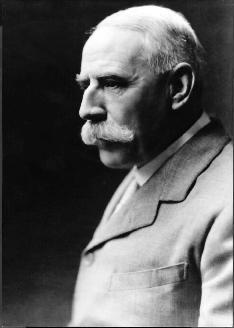
Edward Elgar


Add to Google
Download Cool Free Ringtones Online.

Composer news → rss

[→ submit news]

composer poster ad

Upcoming concerts →

Sat 7 Nov: EL NUEVO MUNDO. 17th & 18th-Century Spain and the Colonial Latin Americas. Cathedral of Saint John the Divine, New York, USA
Sat 7 Nov: Jack Curtis Dubowsky Ensemble Concert Trinity Chapel, Berkeley, CA, USA
Sat 7 Nov: Concerto per la beata Vergine SATB choir, oboe New York City Church of the Hole Trinity, New York, USA
Sun 8 Nov: EL NUEVO MUNDO. 17th & 18th-Century Spain and the Colonial Latin Americas. Cathedral of Saint John the Divine, New York, USA
Sun 8 Nov: An Audience With Hackney Singers St. Johns At Hackney, Hackney, England
[→ submit concert]

Today → (7 Nov) rss

Birthdays:
Dying days:
Events:
(1857) Ferenc (Franz) Liszt: Premiere of Dante Symphony, in Dresden, Germany.
(1875) Pyotr Ilyich Tchaikovsky: Premiere of Symphony no. 3 in D major op. 29 “Polish”, in Moscow, Russia.
(1876) Bedřich Smetana: Premiere of The Kiss, in Prague, Czech Republic.
(1934) Nicoló Paganini: Premiere of the Paganini Rhapsody op. 43, in Baltimore, USA, with Rachmaninov at the piano.
(1934) Sergey Rachmaninoff: Premiere of the Paganini Rhapsody op. 43, in Baltimore, USA, with Rachmaninov at the piano.

Tomorrow → rss

Latest changes → rss

Boaz Avni (31 Oct)
Piet Rippen (26 Oct)
Jacob Obrecht (26 Oct)
José Marín (23 Oct)

Best visited →

[Page views per month]
 
Download classical music on iTunes.
Picture of Edward Elgar.
Source: Oxford Companion to Music
(sent by William R. Hutcheson)

[→ More images]

[→ Listen to music samples on this site.]


Classical Sheet Music and MP3 accompaniment files to download instantly at Virtual Sheet Music ®

Sheet music for Elgar


[details ←] New Favorite Encore Folio, violin, piano,

[details ←] Quintet In A Minor, Op.84, viola, piano quintet, violin, piano, cello,

[details ←] The Dream Of Gerontius Op. 38 (Study Score), choral, vocal,

[details ←] Falstaff/Polonia Vol 33 Complete Edition Score (Paper)

[details ←] Chamber Music Complete Edition

[details ←] The Light Of Life Complete Edition (Paper), choral, vocal,

[details ←] Lux Aeterna, choral, vocal,

[details ←] As Torrents In Summer (SSA), piano, , choral, vocal,

[details ←] The Snow, violin, piano, , choral, vocal,

[details ←] The Shower Op. 71 No. 1 (SATB), choral, vocal,

[details ←] As Torrents In Summer (SATB), choral, vocal,

[details ←] My Love Dwelt In A Northern Land (SATB), choral, vocal,

[details ←] Soliloquy 2nd Edition, piano, oboe,

[details ←] An Elgar Flute Album, piano, flute,

[details ←] Concerto For Cello Op. 85, viola, piano, cello,

[details ←] The Snow (Violin I), violin,

[details ←] Give Unto The Lord Op. 74 (Vocal Score), organ, vocal, , choral, vocal,

[details ←] Five Unaccompanied Part-songs For TTBB Op. 45 From The Greek Anthology, choral, vocal,

Find sheet music:

(At least 4 characters; more than 1 word allowed.)

Sheet Music Plus Featured Sale

Picture of Edward Elgar.
(sent by Niom Eckahiqu)

Cds for Elgar


In association with Amazon.com

Classical Music : Search

The Ultimate Guitar Collection
Classical Music : The Ultimate Guitar Collection
by: John Williams


List Price: $15.99
Amazon.com's Price: $15.98
You Save: $0.01 ( 0%)
as of 10/21/2009 11:59 EDT
Elgar: Cello Concerto; "Enigma" Variations
Classical Music : Elgar: Cello Concerto; "Enigma" Variations
from: Sony


List Price: $7.99
Amazon.com's Price: $7.98
You Save: $0.01 ( 0%)
as of 10/21/2009 11:59 EDT
Favourite Cello Concertos
Classical Music : Favourite Cello Concertos
by: Jacqueline du Pré


List Price: $32.98
Amazon.com's Price: $19.97
You Save: $13.01 (39%)
as of 10/21/2009 11:59 EDT
Agnus Dei: Music of Inner Harmony: The Choir of New College Oxford
Classical Music : Agnus Dei: Music of Inner Harmony: The Choir of New College Oxford
from: Erato


List Price: $16.99
Amazon.com's Price: $13.99
You Save: $3.00 (18%)
as of 10/21/2009 11:59 EDT

page 1 of  188
 1  2  3  4  5  6  7  8  9  10  11 


Classical Music MP3s at eMusic! Download 25 tracks for FREE

See also:
English composers
Romantic composers
Trombonists
Conductors
Born: 2 June 1857 — Broadheath — England
Died: 23 February 1934 — Worcester — England
Reactions


What a load of pretentious drivel !!! Why on earth did David Wright waste his time submitting this (and who on earth is he) ? How ridiculous to bother to write about a composer and music he so obviously dislikes - I wonder how he'd react to Arthur Sullivan ??!! Is a touch of jealousy detected ??

[by “Anonymous” on 2009-02-19 08:23:28]
I agree

Absolutely pointless - this is just an opinion piece with little or no musicological merit. His criticisms of the cello concerto are absolutely laughable.

[by “Anonymous” on 2009-08-30 20:31:44]
I Agree too

The only sense is the paragraph t the bottom, not to be copied, I really hope it is never copied. It is the most pointless ramblings I have read. Would it not have been easier just to write, I am not a fan instead of the character assassination. I along with thousands think Elgar is fantastic, his music is far grater than he receives credit for. And personally I think David Wright should give up writing, let alone Ivor Atkins turning in his grave, perhaps Mr Wright you should fully read the Ivor Atkins friendship!!! My piece said!

[by “Anonymous” on 2009-09-23 18:41:39]
Apologies for our patient

We try to keep him properly sedated and well away from a computer, but he keeps escaping ...
Nurse!! The needle, quickly!!!

[by “Anonymous” on 2009-09-26 04:48:00]


News for Elgar

Music


Below is a list of compositions for Edward Elgar. Click a title for details. [♫] indicates that the piece has one or more MIDI files available, provided by kunstderfuge.com.
OpusTitle [subtitle]KeyDate
Symphony
55Symphony No1 1908
63Symphony No2 1911
88Symphony No3 1933
Overture
40Cockaigne Overture 1901
Suite
1Wand of Youth Suite 1907
66Crown of India: Suite 1912
Concerto
61Violin Concerto 1915
85Cello Concerto E min1919
85Viola Concerto E min1929
90Piano Concerto 1933
Choral piece
26 no. 2Fly, Singing Bird 1894
Chamber music
4Idylle 1884
Song
59Three Songs ??
Not (yet) classified
Beau Brummel ??
Follow the Colours ??
60 no. 1The Torch ??
60 no. 2The River ??
Rosemary - That’s for Remembrance 1882
19Froissart Overture 1890
36Enigma Variations 1890
20Serenade in E minor E min1893
25The Black Knight 1893
26 no. 1The Snow 1894
29Light of Life 1896
30King Olaf 1896
32Imperial March 1897
33Banner of St George 1897
34Te Deum and Benedictus in F 1897
35Caractacus 1898
10 no. 1Mazurka 1899
10 no. 2Serenade Mauresque 1899
10 no. 3Contrasts 1899
15Chanson de Matin 1899
15Chanson de Nuit 1899
37Sea Pictures 1899
38Dream of Gerontius 1900
May-song 1901
39 no. 1Pomp and Circumstance March 1901
39 no. 2Pomp and Circumstance March 1901
42Grania and Diarmid 1901
43Dream Children 1902
44Coronation Ode 1902
49Apostles 1903
39 no. 3Pomp and Circumstance March 1904
50In the South 1904
47Introduction and Allegro 1905
51The Kingdom 1906
39 no. 4Pomp and Circumstance March 1907
48 no. 1Pleading 1908
57Go, Song of Mine 1909
58Elegy for Strings 1909
62Romance for Bassoon 1910
65Coronation March 1911
67Great is the Lord 1912
69The Music Makers 1912
Carissima 1913
68Falstaff 1913
70Sospiri 1914
74Give Unto the Lord 1914
75Carillon 1914
Une Voix Dans Le Desert 1915
76Polonia 1915
78Starlight Express 1915
79Le Drapeau Belge 1915
80Spirit of England 1916
Fringes of the Fleet 1917
81The Sanguine Fan Ballet 1917
The Empire March 1924
Soliloquy 1930
39 no. 5Pomp and Circumstance March 1930
Nursery Suite 1931
88Spanish Lady Suite 1933

(Contributed by Stephen <spbmrmusic(at)aol.com>)

Life

Elgar

Elgar Unmasked
by
Dr. David C.F. Wright

There is probably more nonsense spoken and written about Elgar than any other composer. And the trouble is that this nonsense is often believed and so we create a myth.

I realise that this article will be controversial but I might add that I have ample evidence to support what I say.

Elgar had been elevated in Britain to the status of royalty and, as it would be treason to speak against the Queen, so it is that many peoples’ attitudes is that to speak against Elgar is also treason.

Sir John Barbirolli was one of the instigators of this nonsense. He said that you cannot be a music lover or a musician unless you adore Elgar. Those words, ridiculous as they certainly are, have had a profound effect particularly on the British and is national establishment if anyone were to say the same about Bach, for example, it would be just as ridiculous.

On the other hand, Sir Thomas Beecham detested both Elgar and his music and devoted his time to the music of Frederick Delius who, along with Elgar, died in 1934.

Elgar is the only composer who has had a Depreciation Society in which famous musicians would discuss his work and its many weaknesses. At first, some may say that this society had evil intent and was fuelled by jealousy or some other unpleasantness or unfairness and that this society was out to damage Elgar’s reputation.

The society did not have to do that. At its inception its members were people who knew Elgar personally and his music intimately.

The number of musicians who hated Elgar’s music is considerable and include famous names. Ravel was physically sick whenever he heard Elgar and simply loathed the Cello Concerto; Sir Charles Villiers Stanford also detested Elgar’s music, including the Cello Concerto. There is that wonderful story that he wrote to Elgar one day and said that he was sitting in the smallest room in his house with a copy of the Elgar Cello Concerto before him but that, thankfully, it would soon be behind him. This concerto also highlights a disturbing aspect of Elgar. Many of his contemporaries said that he always insisted that if a female played this concerto she must wear navy blue knickers and he often inspected the soloist to ensure that this was the case. And this was not done in saucy fun but in a serious and lecherous way. There is a diplomatic and rather veiled illusion to this in the biography of Beatrice Harrison.

Furthermore, Elgar insisted that any girl or woman who took part in any of his music whether it was in the choir or the orchestra must wear navy blue knickers and he would walk along the row of female performers and, with his stick, lift their skirts to see if his wishes were being carried out. Surprisingly few of the women complained as Elgar was a knight of the realm and famous and to complain about him was high treason. My great uncle, Sir Ivor Atkins, recounted these stories and I have twelve other letters from women, who are now elderly, who confirm that Elgar did do this. Kathleen Stovold said, "Elgar would ask all the ladies into an ante-room and he would be with us on his own. He would ask us to sing a few notes, tell us how to stand and then use his stick. He was an indecent and repulsive man." Mrs. Edgar Wood of Bromley recalls it vividly and recounts that after one such inspection Elgar said to her, "Well, you’re no Virgin Mary!"

Elgar was a very unpleasant man.

As we have said, Beecham hated Elgar’s music. Sir Adrian Boult often performed it but always disliked it intensely. He made the famous remark that if Elgar’s music is played badly, you blame the orchestra and if it is played well, you blame Elgar. Sir Hubert Parry once corrected Stanford who had said of The Dream of Gerontius that it stank of incense. "Oh. no, Charles. You are wrong. It does not stink of incense. It just stinks!"

Herbert von Karajan said, "I don’t know what is better. The moment before the Elgar begins or the tremendous relief when it is all over."

Sir William Walton initially had some regard for Elgar but by 1960 admitted that he had unintentionally been a hypocrite. "I said that I liked Elgar simply because everyone was expected to, but now I live in Italy I do not have to kowtow. The greatest composer of the 20th century is Shostakovich and at the other end of the spectrum there is Elgar." Elgar had dismissed Walton’s Viola Concerto as abuse of the instrument but, really, Elgar was displaying an evil jealousy.

When one of the London orchestras toured Japan they played Walton’s Symphony no. 1 and the Elgar Cello Concerto. The Elgar was booed and hissed and the Walton had enthusiastic applause. I have the tape of that concert.

Alan Rawsthorne had a work of his own played in a concert but it was to follow the Elgar Cello Concerto. About three minutes into the concerto Alan left the auditorium and went to the bar. Humphrey Searle and I followed him. We thought that he was ill and were prepared to take him home. He had not yet been served with a drink but was shaking uncontrollably. "There ought to be a law against music like that," he said in evident distress, "It is so unbelievably bad. What do either of you know about the Trades Description Act?"

He then had his drink, calmed down and returned after the Elgar was over to hear a performance of his Symphonic Studies.

My friend, the Irish composer Gerard Victory, showed one of his early composition to Alan Rawsthorne, who strongly advised that the work be rewritten. "What is wrong with it?" asked Gerry. "There are passages that sound like Elgar," responded Rawsthorne, "and no one in their right mind would want to sound anything like Elgar!"

Stravinsky was asked if Elgar was a great composer. "No, he certainly is not but he is greatly thought of," he replied.

There is a super story of Sir Alexander Gibson taking his son when he was quite young to a concert which he was conducting. They played Elgar’s Symphony no. 2 and afterwards Gibson asked his son if he thought the piece was too long. "Ach, nae, Daddy, it were nae too long. It just seemed too long."

Gustav Holst was not in sympathy with Elgar as a man or a musician. He used to say that listening to Elgar was therapeutic since it was the most effective and quick-acting laxative he knew.

A visiting orchestra was giving a series of four consecutive weeknight concerts in Paris a few years ago. The orchestra was one of the greatest in the world and the conductor was universally admired. The first concert given was to a packed house with music by Haydn, Mozart, Beethoven and Brahms. The following night included the Elgar Cello Concerto and the Elgar First Symphony and the audience present was well under a hundred. The ticket office were trying to sell tickets at half price on the day on the concert and put an advertisement on national television. But the third night was also a full house and the music was by Maderna, Nono, Stockhausen and it was the only night that poured with torrential rain! The final night was an all French programme and had a full house as well.

What are we to make of all of this?

The objections to Elgar’s music by the professionals were for musical reasons. It is badly written. "It is like receiving a long awaited and important letter and not being able to read any of the handwriting," said Vaughan Williams. "Glorified amateurism is what it is," said Beecham.

And, much as I do not care for Beecham, I have to eat humble pie and say that he is right… simply because he is.

I believe that a man’s music is the man himself. It is the same for novelists and writers of factual matters or matters of belief. Richard Dawkins writes about evolution because he is an evolutionist. He would not write a book proving creation. Charles Dickens wrote about social issues in his novels because that is the way he felt about them. Germaine Greer believes in feminism and writes about it enthusiastically because she is a feminist. Anton Bruckner was probably the greatest composer of religious and spiritual music and he wrote like that because that was the way he was. The same can be said for Messiaen. Agatha Christie’s books are badly written and the plots are contrived but the books may hold our fascination. But the fact that she is popular does not make her an accomplished or great author.

So it is with Elgar.

Edward Elgar was born at Broadheath near Worcester on 2 June 1857 of a middle class family. His father was William Henry Elgar who originally came from Dover.

In 1859 the Elgars moved to Worcester where they had lived before. W.H. Elgar was a piano tuner and used to attend to the pianos of the Earl of Dudley at Witley Court and other nobility. It is said that he sometimes tuned the pianos of Queen Victoria. He was keen to play the violin but showed no real aptitude for it. He joined the Worcester Glee Club and met a family called Leicester. They were Roman Catholics of the Jesuit variety and encouraged William to take up the organist post at St. Georges which he held for 37 years. But Elgar did not approve of Romanism.

In 1848 he married Ann Greening who was a romantic at heart loving old tales of chivalrous knights rescuing damsels in distress and their subsequent falling hopelessly in love with the hero.

Their first child was Harry who wanted to pursue a career in one of the sciences but died young. Lucy, who was born in 1852 had a sad life. She was very gifted but, as it was said, married beneath her. She had a childless marriage and was deaf in her advanced years and always very difficult to get on with. Susannah Mary, known as Pollie, was born in 1854 and was the most liked of the family. My great uncle, Sir Ivor Atkins, said that Pollie was the antithesis of Edward. Edward could be difficult, unpleasant and arrogant to an infuriating degree whereas Pollie was charming, easy-going and humble although not servile. These children were born in a terraced home facing the cathedral.

Edward was born in 1857, Frederick Joseph, known as Jo, was born in 1859; Frank, really Francis Thomas, in 1862 and, with the family moving back to Worcester to live above the music shop at 10 High Street in 1863, Helen Agnes, known as Dot, born in 1864. She later became a Dominican nun.

W.H. Elgar was something of a hypocrite. He loathed Catholicism and yet engineered his way in to selling music and musical services to Catholics securing agencies to sell music to Catholic churches. It was the Leicesters who persuaded him to start a music shop where pianos, music and other services were available. Why did Elgar senior send Edward to Catholic schools and train him on the organ at St. Georges? Probably because Mrs. Elgar became obsessed with Catholicism.

The great event in the district was the annual Three Choirs Festival which had difficulty recruiting people to take part. W.H. and Edward were allowed to play in the violin sections though neither of them were very good.

The appalling arrogance in young Elgar showed itself early on. He would say to his mother, "I will not be satisfied until I get an important letter simply addressed Edward Elgar, England?"

He went to to work for a short while with a Catholic solicitor, William Allen, but did not like this because he was “not important enough”. He returned to his father’s shop working at the accounts of the business.

He had no proper training or tuition in music making. His violin playing was never special but he had a few pupils and would play in small ensembles.

Elgar was sent to London in 1877 for violin lessons with Pollitzer who promptly told Elgar that he was not and would never be a good violinist and that he was severely lacking in all aspects of music.

In 1879 he was given the job of conducting an orchestra at the County Lunatic Asylum at Powick. That was certainly not a prestigious post. He wrote anthems for the cathedral choir and songs for the Glee club. He would compose during sermons.

"If only Elgar had had professional help and studied with a competent musician… and if only he had been a nice man," wrote Sir Arnold Bax.

Indeed!

In 1899 Edward married Caroline Alice Roberts whom he had taken as a pupil in 1886. But it was not his first amorous adventure nor would it be his last.

In his early twenties he became attracted to Helen Weaver, the daughter of a shoe merchant. There was trouble in this relationship simply because Helen was very intelligent and an excellent musician and put Edward in the shade. Helen was to study at the Leipzig Conservatory which realised her exceptional talent. There was no way Leipzig, or any other Music College or Conservatory would take Elgar. This hurt his pride and he persuaded his parents to let him have a holiday in Leipzig and so in the winter of 1882–3 he had just enough money to go there for three weeks and he hung around Helen to her annoyance. When she returned to Worcester in the summer of 1883 he pleaded with her to become engaged. The only way to relieve the pressure was to say yes.

But she broke the engagement. The death of her mother has been cited as the reason but the facts are that Elgar could be such an unpleasant, demanding person and he was a control freak as well. He was so self-opinionated that Helen simply could not stand him.

Her rejection caused Elgar not to speak of her again.

Elgar was usually drawn to older woman. He had a fascination for Mrs Harriet Fitton who was 23 years older than he was. She had studied with a pupil of Chopin. She took pity on Edward and encouraged him to her house to play chamber music with other musicians. One of them was Henry Bellasis a pupil of Cardinal Newman who, with his brother, Richard were Catholic priests. Richard was the inspiration behind The Dream of Gerontius.

Although drawn to older women since he was a very insecure person always wanting a mother figure he was lecherous as well. He persuaded Mrs. Fitton to have him teach her young daughters. The eldest was Isabel who was very beautiful and learning the viola. Elgar spend a lot of time telling her how to hold the bow and depress the strings but it was merely a ruse to be close to her and her hands. In the end Isabel stopped the lessons. She was afraid of what Elgar was leading up to.

Caroline Alice Roberts was the daughter of a Major-General who had seen service in India. She now lived with her widowed mother in a large house in the Malvern Hills and was nine years older than Elgar. She was upper class, far higher up the social ladder than Edward. She was a writer and very gentle in manner. In fact she was a very weak character for after her marriage to Elgar she watched his affairs with other women which he conducted under her nose and without shame.

Neither family were keen on the marriage. Elgar’s parents knowing their lecherous son as well as anyone could, could not see how a woman of 40 would satisfy Elgar and how long a physical relationship would survive. If they had lived today they would have said that Alice was past her sell by date. And, Mrs. Elgar objected because Alice was a Protestant. Alice’s parents were now both dead but her family were horrified that she should marry a tradesman’s son.

Alice had cared for her parents and was used to being in a supporting role. And this is all she was in her marriage to Elgar. He treated her like dirt but he treated everybody the same way. Some of his biographers have perpetrated the myth that Alice encouraged her husband to ‘friendships’ with other women and younger ones and was herself ‘glad to have these other women as her friends too.'

Well, anyone who believes that lives in cloud-cuckoo land!

This situation has to be looked at in the light of what Alice had done. She had gone against her family, religion and social class to marry this man. She used her income to support him. She was always at his beck and call and did everything for him. She tolerated his constant bad behaviour, temper and abuse and his dalliance with other women and some very strange relationships with men. She would send him off to his club in London because he needed a change whereas as in fact Alice needed the change. He was intolerably rude to everybody and she had to regularly apologise to guests.

If ever there was case for women’s rights and equality this is the one!

We have got to stop treating composers as if they were God! They are mortal, human and flawed and some more than others!

Their daughter Carice Irene was born in 1890. The cruelty shown to her by her father was in that he prevented her from developing musically since he could not endure her practising as it would show to others that the Elgars were vulnerable. If Carice did not succeed as a musician her father’s ego would be damaged. Carice learned one rule from her father, and only one, and that was to do all that she was told, and that included the fact that she had to be silent for fear of disturbing his genius.

To quote Parry she was not allowed to have a childhood. She grew up to be a woman without real affection. She married a sheep farmer from Sussex and had no children.

Like everyone in Elgar’s life she was dominated by him. Those that refused to be dominated by him he pilloried ruthlessly.

I met Carice and had a long and revealing talk with her but it would be injudicious of me to divulge what she said.

Her father really was a thoroughly unpleasant man.

Despite the book about my great uncle’s friendship with Elgar, it is true to say that Elgar did not have friends. One biographer writes, “What was uncommon about Elgar’s friendships among both sexes was his use of the friendships themselves ‘for creative purposes’.”

That is sheer nonsense.

His friendships with women were for sexual gratification and, remember, if you are a female and are going to play his Cello Concerto you must wear navy blue knickers. Or if you are a girl or female in the choir or orchestra make sure you are wearing navy blue under your skirt. His ghost might appear and lift your skirt. He used, and abused, his so called friends and that he should compose a work, the Enigma Variations and dedicate it to ‘my friends picture within’ and, more so, not to identify them all adds up to a very shallow, insincere, immature and secretive attitude.

I believe that the Enigma Variations are mainly a record in code of Elgar’s eroticism and sexual exploits or fantasies. Alice is there as is the beautiful Isabel Fitton tuning her viola together with Dora Penny and Winifred Norbury. There is also a portrait of Lady Mary Lygon and “other damsels being held against their will for sexual purposes in towers wanting for a chivalrous knight to rescue them” who, of course, is the lecherous Elgar himself. Elgar’s musical reference to Mendlessohn’s The Fair Melusine is a further endorsement of my view. He tries to put us off the scent by including a variation about Jaegar but his relationship with him was suspect.

Biographers call the women in Elgar’s life encouragers or supporters. One was Rosa Burley the young headmistress of The Mount where Elgar taught the violin. She admitted that he was a most inept teacher. Even after his marriage Elgar would take Rosa on long bicycle rides deep into the country and the woods. To make it respectable there were a few times when young ladies from the school went with them but these rides were always of a shorter duration. Alice was seething inside by these events. After Lady Elgar died Miss Burley admitted to Carice that she was much more than her school teacher.

And there was Dora Penny, the Dorabella of the Enigma Variations.

And who was Windflower, the “most beautiful woman I have ever seen, my heart, my life, my all.” His Violin Concerto was inspired by her and her stunning sexuality. This was in 1909–10. He had been married for ten years by then.

It is believed that Windflower was another Alice who married Lord Charles Stuart-Wortley, MP for Sheffield. She was born in 1862 and died in 1936. She had a daughter called Claire. Elgar was besotted with this Alice and they used to met clandestinely.

It is said that he took up cycling in 1900, shortly after his marriage, to pursue his amorous adventures.

The Violin Concerto is a dreadful work. Fritz Kreisler rightly said that it was too long and tedious and wanted it cut. The finale marked Allegro, which word means merry, quick and lively is a dreary slow movement for most of the time. Kreisler pleaded with Elgar to revise the work and correct all its mistakes but Elgar would not listen. The great violinist rightly complained that it was structurally unsound. The myth that violinists will not take it up because it is too much of a challenge and too difficult is another myth generated by Elgar fans. Discerning violinists do not take it up because it is so very badly written and because it reeks of nostalgia and sickly sentiment. But the Cello Concerto is worse!

But to go back a little.

In 1878 Elgar had designed a symphony based on Mozart’s Symphony no. 40 in G minor. Had he carried this out that it might have proved a good move. The Mozart has quick movements and a sound structure although it has weaknesses. Elgar’s Symphony no. 1 of 1908, thirty years later, had all the faults that pervade his music. The movements marked allegro are not quick or lively but ponderous, with the first movement theme, which is a motto theme, is a slow andante. It is pompous, arrogant, diffuse and self-righteous and the symphony lasts about an hour. The orchestration is thick and turgid and, frankly, nauseous. Furthermore it is Elgar trying to be a hero from one of his mother’s adolescent reverie of knights in shining armour rescuing blond long haired girls pleading from a tower which damsels are delightfully beautiful and pencil slim.

The work was a success but I suggest that this was from an historical point of view. It was the first big British symphony. Germany with Brahms had written big symphonies and now Britain had. Well done, Elgar, the four minute mile is yours! No one has written anything like this before but Elgar’s dependence on a motto theme and cyclic form misleads him.

It is Elgar saying that he is nothing and wants to be a hero. I shall not be satisfied until I receive an important letter simply addressed Edward Elgar, England.

Elgar had some strange relationships with men but he also had a obsessive fascination with general Gordon of Khartoum who died in 1885. Gordon had been given a copy of Newman’s Dream of Gerontius and it had appealed to him. Like Gerontius, Gordon’s story was one of heroism. He was big and Elgar wanted to be big. In fact, for Sir Ivor Atkins first conducting at the Three Choirs Festival in 1899 Elgar had promised a Gordon Symphony. It never materialized.

Ann Elgar had imbibed Catholicism, which became her second great obsession after her knights of yore. Edward always needed a mother figure, someone to hold his hand and tell him what a good boy he was. This also found its expression in Roman Catholicism the religion that holds your hand and forgives your indiscretions upon confession and penance and I have never understood how penance, a clever word for punishment, should be quoting Scriptures and prayers.

Gerontius is a bore. The opening prelude is slow and tedious and sets the tone for the whole work.

But here is another myth. It has been reported that Stanford said that he would have given his head to have written part one of Gerontius.

Stanford hated the piece. He called it, "All smells and bells."

Others claim that its premiere at the Birmingham Festival of 1900 was a failure because the music was too advanced in idiom. Of course, that is nonsense as well. Brahms was more advanced than Elgar ever was. Then the failure was blamed on the conductor Hans Richter who never lived it down and so felt he had to say kind things about Elgar’s work thereafter to save face. He was a man in a corner. Its failure was also blamed on the sudden death of the chorus master shortly before the premiere. And, to crown it all, Elgar blamed God for the work’s failure in a letter to his publisher, Jaegar.

That tells us a lot about Elgar.

This work is not a dream, but an awful nightmare.

Curiously a few Germans loved it. Richard Strauss is supposed to have admired parts of it. But this has to be understood in the context of the times. The increase in competitive industrial rivalry between Britain and Germany was at an all time high and Kaiser Wilhelm wanted the British throne. After all, his wife was the eldest child of Queen Victoria.

And Germany at that time was looking back into its history and the concept of the Aryan race, Germany’s most noble warriors. Gerontius was a hero. All Germans are heroes. It was this that inspired Hitler.

Elgar was fulsome too. In 1902 he went to Bayreuth to see a production of Wagner’s masterpiece The Ring.

He also saw the potential in toadying. He was not the first to do it and he will not be the last.

Elgar was also every friendly with his publisher August Jaegar. They even vied with each other to look the same. They would often go off for frolics in the wood and to mess about by the river. There were furtive arrangements for meetings and it appeared so sinister.

He had curious feelings for Edward VII. And, after all, he was an Edward too. In 1902 he wrote a Coronation Ode, an almost certain way to get a knighthood just as in more recent times Elton John performs at a sad royal event and is similarly honoured. The ode contains the tune Land of Hope and Glory and it was Clara Butt who suggested that Elgar turned it into a song. It has become a sort of British national anthem. Elgar was a toady.

Elgar’s boring Symphony no. 2 was dedicated to the memory of the king and, even allowing for the elegiac nature of the work, it is one of the most flawed and badly written symphonies ever. Along with Mahler’s Symphony no 4 it was, in 2002, nationally voted the most least admired symphony.

Alice insisted that this symphony was written not in memory of the king but of a friend who died in 1903

The first movement is headed Vivace and nobilmente which is a contradiction in terms. Vivace means fast and lively whereas nobilmente means stately and ceremonial which, by its very nature, indicates a majestic, dignified and moderate speed. The movement is not vivace at all, but predominantly slow with a few agitated sections. It consists of 353 bars in four time in 59 pages of score and lasts about twenty minutes. Had it been vivace in the true meaning of the word as displayed by Haydn or Mozart and the unit of one beat equal to 140 on the metronome 353 bars would last about 10 minutes, not twenty. In my recording with Haitink the overall speed is one beat equals 69 which qualifies it as an adagio or slow andante. Some performances take longer. The movement is self-indulgent and boring. There are vast expanses in which nothing happens. It is a grey concrete slab of melodic nullity. The longueurs inherent in the music produce ennui and several composers and other musicians have openly, and rightly, complained that this piece, and other works of Elgar, have caused them to be angry and physically ill. Often the music wallows in unrelenting self-pity or personal depression and yet the composer had the temerity to declare that it is a work of tremendous energy

After this long opening movement one would expect the second to be contrasted in tempo. It is not. What we have is another slow movement lasting about sixteen minutes. However, it does present an occasional hint of beauty although the Elgarian pomposity is stalking menacingly in the background and with deliberate tread.

The third movement is a rondo marked presto and lasts just over eight minutes.

The finale is marked moderato and maestoso which means majestically. And yet it is in 3/4 time which is an inappropriate time signature. The movement lasts about 14 minutes and is arrogant, pompous and tiresome. It has no clear direction. It has no satisfactory structure.

And so, we have a four movement symphony lasting about 58 minutes in which 62% is very slow, 24% is slowish and only 12% of it has any speed or liveliness.

It is thick, turgid and simply dreadful.

In 1911 Elgar composed a Coronation March for the new king, George V. The following year came The Crown of India, India being then still part of the British Empire, and a further example of his irritating toadying.

It is said that landscapes and countryside are the inspiration behind most of Elgar’s work. Caractacus is said to be an invocation of the Malvern Hills and the Woodland Scene said to depict a forest near the river Severn. The sickly Introduction and Allegro for strings is also said to a portrait of the Malvern Hills and with its angular theme one can sense the undulating landscape. But the work is based on a Welsh tune. Cockaigne is subtitled In London Town and is noisy and raucous, bombastic and crude. The trouble is that such noise can be exciting and wrongly interpreted as a great music. In the South is subtitled Alassio and is a portrait of Italy which Elgar first visited in 1903–4.

In all this Alice remained faithful. She tried to make him into a country squire and live above his station. She encouraged him to read and may have inspired the Symphonic Study Falstaff of 1913. It may be his best work but it is still poor. He indulges in dreary uneventful music but does try to introduce some chromatic harmony. This, along with The Music Makers of 1912 was written when he was living in Hampstead, North London which location was essential to his pride. Only important people lived in Hampstead.

The Great War affected Elgar but he used it to milk the British public. Nauseating patriotism came back into his work with a vengeance. The Starlight Express of 1913 was some incidental music for a children’s play. The Sanguine Fan is an awful title for any work and the music is no better.

It was with The Spirit of England that he really went overboard with his insincere patriotism. He wrote it to get noticed. It was typical of his crass self-indulgence.

In this he has a counterpart with Benjamin Britten another arrogant and thoroughly unpleasant man. Britten would say," I am Britain. I am the voice of British music and I alone." When he was made a Lord he said, "I am now Lord of Britain."

Such arrogance in Elgar and in Britten might be excused to some extent if it were that their music and their art was even moderately good.

The end of the war should have been a time of rejoicing. Elgar wrote some dreadful chamber music during 1918–9 so inept that one wonders why they even get an occasional airing. The intimacy of such genres shows all his flaws and how incompetent Elgar was. There is a dull String Quartet, a Piano Quintet, which shows, among many other things that he was absolutely useless at writing for the piano, and a Violin Sonata. Two of these works are in E minor, his key of misery as was to be his ghastly Cello Concerto on 1919.

And into Elgar’s life of pomp and circumstance came the nauseating wallowing and, to quote a Biblical comparison, the pig returned to its own vomit.

The Cello Concerto is a travesty. Its popularity cannot be due to the quality of the music since the music is very poor. Has its popularity come about because of Jacqueline Du Pre’s association with it and the very sad circumstances of her life and death? Did she wear navy blue knickers each time she played it? Had Elgar been alive he would have checked.

The first movement begins adagio with eight bars in 4/4 time headed with Elgar’s favourite instruction nobilmente. It is pompous and, at bar 4, there is a slur of a perfect 5th marked crescendo which makes it sound ugly. The tempo changes to moderato and the first 36 bars that follow, with the exception of one, has the same rhythmic pattern which becomes tedious. The main theme is made up of only two bars repeated 18 times. The movement goes into 12/8 and has another repetitous rhythmic figure, occasionally varies, which is also tedious. It is played 53 times. We move into 9/8 and this tedious rhythm appears 24 times in as many bars.

But Elgar had other weaknesses. There are 18 changes of tempo in the first movement. That is excessive and shows that Elgar could not write flowing or elegant music.

The second movement has two bars of lento before the Allegro molto begins. Again the theme is so slight as to be banal. It only has a compass of a perfect fourth and is constantly repeated e.g. bars 3, 5, 7, 13, 15, 17, 18 etc. there are 16 changes of tempo in the first twelve bars, namely lento, accel., allegro molto, rit., a tempo, rit., molto, pause, a tempo, accel., lento, accel., rall. lento, pause.

Again, it is stop and start music.

The third movement is headed adagio. It is short and structurally the best movement.

The finale is marked allegro but it is not. Like the theme of the opening movement it is only two bars long and restricted in range to an augmented fourth. There are 37 changes of tempi in the movement and the main discourse is not allegro but the long and boring allargando passage (figure 62–73). The opening of the first movement returns just before the end complete with the ugly slur, 4 bars after 72. Just before figure 62 there is some typical vulgar trombone writing, another feature of this composer.

This work makes me physically ill as well as it does other people. It is so badly written and, without doubt, the worst piece of music I know.

Alice died in 1920. In 1923 Elgar moved back to Worcestershire following a disastrous year, his last year in London where he had a flat at 37 St. James’s Place.

Elgar’s popularity waned as a result of this hideous concerto. A performance of his oratorio The Apostles had an audience of six people at a concert in 1922 and it is believed that these tickets were all complimentary ones. Was this the beginning of the Elgar Depreciation Society? His popularity began to pick up when a 16 year old boy recorded the Violin Concerto in 1932. His name was Yehudi Menuhin.

In 1924 he was made the Master of the King’s Music and became a baronet.

Elgar tried his hand at writing an opera The Spanish Lady and worked on his Symphony no. 3 which consisted of about 120 bars at his death. The fine British composer Anthony Payne has taken this slight material and turned it into a symphony. But whose symphony is it? The orchestration and structure is far better than anything Elgar ever wrote and over 90% of it is by Mr. Payne. And yet the symphony is called Elgar’s Third whereas it is Tony Payne’s Symphony on sketches by Elgar in the same vein as Hindemith’s Symphonic Metamorphosen on themes of Carl Maria von Weber.

Elgar died at Marl Bank, Worcester on 23 February 1934.

Beecham was asked what were Elgar’s greatest works. "Everything he wrote and personally conducted after 1935," came the prompt reply.

As to Karajan’s remark there are many of us who would say that not to hear this music is the only path to follow.

Ravel’s comment is of interest. He was asked to comment on Elgar and he retorted, "Is he the composer of THAT Cello Concerto?"

Michael Kennedy in his Concise Oxford Dictionary of Music refers to Elgar as a great composer who wrote splendid works. He refers to the Enigma Variations as his greatest work and says that King Edward VII prevailed upon Elgar to set the words to what we know as Land of Hope and Glory. Kennedy says that Elgar’s greatness as a composer lies in his ability to combine nobility and spirituality of utterance in a popular style. He states that Elgar terminated his lessons with Pollitzer. He also refers to the Symphony no. 2 as a great work.

Kennedy is defending Elgar. A great composer does not need an advocate.

And so, the myths continue and some people are foolish enough to believe them.

During several years in the early 1980s the most regularly played item on Radio 3 was the Elgar Cello Concerto. In one month it was played 13 times. For every 25 performances of the Elgar the sublime Dvořák Cello Concerto was played once! As far as the Elgar was concerned this was a hard sell but why? The work was over-exposed. We were saturated with it. In fact drowned by it. It was all over-hype.

Norman Del Mar said, "If Elgar’s Cello Concerto is a worthy piece it would have found its way its way on its own but the fact that it has had to be given prominence tells us what it is really like!"

The composer H. Balfour Gardiner said that every time he heard anything by Elgar he had to use the bathroom and have a good wash.

It is music of big, empty gestures.

But to refer to my great uncle. Sir Ivor Algernon Atkins was born in Llandaff in 1869. He was the organist at Worcester cathedral for 53 years from 1897 to 1950 when his successor, whom everyone has told me was very unpleasant and unkind to Sir Ivor, causing him so much pain, pushed him out. Hugh Blair was the organist before Sir Ivor and it was Blair who inspired Elgar to write his Organ Sonata. Gordon Jacob thought it was a hideous piece and orchestrated it to see if it could be improved.

There was extensive correspondence between Sir Ivor and Elgar. Elgar called my great uncle Firapeel after the leopard in Reynard the Fox. As my uncle said, Elgar was the fox and in every sense of the word. Sir Ivor felt obliged to ask Elgar to be the godson of his son Wulstan who was to become the trustee of Elgar’s birthplace at Broadheath which Elgar insisted be kept as a memorial to him after his death. Is there no end to his arrogance?

Sir Ivor conducted at the Three Choirs Festivals and Elgar would badger him ruthlessly to put on his works. Atkins, being a gentleman, acceded as he was a man to keep the peace . He was not bellicose or pompous as was Elgar.

G.R. Sinclair was Atkins’s teacher. He lived from 1863 to 1917 and was a crusty old bachelor. He had a house near Hereford cathedral which he shared with a large bulldog, Dan. Elgar became obsessed with this dog in a very unnatural way and would scribble in George Robertson Sinclair’s Visitors Book musical fragments which he called The Moods of Dan. One of these ideas was later used in Gerontius. Although English, Sinclair studied at the Royal Irish College of Music and was assistant organist at Gloucester cathedral in 1879. He was organist and choirmaster at Truro cathedral from 1880–89 and, thereafter and until his death, organist at Hereford cathedral. Like Atkins he conducted at the Three Choirs Festival for 21 years from 1891. He was also conductor of the Birmingham Choral Union from 1899 until his death.

To further illustrate how fickle Elgar was, the eleventh variation in the Enigma variations headed G.R.S. is not a homage to Sinclair but to his dog, Dan.

Alfred Herbert Brewer was organist at Gloucester cathedral from 1896 until his death in 1928. He was a gifted composer. His cantata, Emmaus, Elgar did not like and took it upon himself to rewrite parts of it. Brewer was succeeded by Herbert Sumsion to whom Elgar was as unnaturally affectionate as he was to Dan the bulldog. Sumsion was always uncomfortable around Elgar. He composed well and there is a super Piano Trio of his, vastly better than Elgar’s chamber works.

Elgar dedicated Pomp and Circumstance marches to Sinclair and Atkins and number 5 to Percy Hull who was the organist at Hereford after Sinclair.

Like Walton, Atkins originally thought well of Elgar. Sir Ivor heard the premiere of Froissart in 1890 and believed it showed a composer of promise. Sir Ivor was only twenty one and wrote in words one can only associate with the enthusiasm of youth when he wrote, "I knew that Elgar was the man for me. I knew that I completely understood his music, and that my heart and soul went with it."

But Atkins became troubled at Elgar’s arrogance. Sir Edward had a preoccupation with his own self-aggrandisment and wrote to my great uncle in 1911

“Worcester people seem to have no notion of the glory of the O M. I was marshalled correctly at Court and at the Investiture above the C M C G and G C V O — the highest Beauchamp got — next G C B in fact; such things as K C B are very cheap besides the OM.”

Major General Roberts had a K C B.

What conceit, what arrogance and what ignorance!

It has been truly said that Elgar’s attitude was that he was to please nobody but that everyone had to please him.

All this is as nauseating as his music!

But my great uncle remained friendly with Elgar because Elgar was so weak. Elgar would say that only Firapeel could get him out of his despair. But Elgar was an absolute beast to him personally, as well tampering with Sir Ivor’s choral work, The Hymn of Faith and wanting a hand in Sir Ivor’s edition of the Bach St. Matthew Passion. He made made a few comments so that he could be joint editor and his name could appear alongside a fine musician of which he himself could never be one. Elgar being a Catholic objected to the Authorised Version of the Bible since it was protestant and wanted to alter words to bring it in line with his perception of things. He tried to persuade Sir Ivor Atkins to change the texts for the anthems he wrote.

It was said that Elgar should have been award the OBE which, in his case, would stand for Other Buggers Efforts.

Elgar received awards because of his toadying. Other musicians received them in recognition of their worth as musicians. One such was Sir Ivor Atkins who had at least three earned degrees in music whereas Elgar had only honorary degrees, four, I believe.

That speaks for itself.

It has been said that Elgar only had two tunes… that with the big melodic leaps as in the Symphony no. 2 and, secondly, when the melody is of notes close together as in the opening of the Cello Concerto and the cor anglais solo in Falstaff.

But all these professional objections to Elgar’s music will evoke sympathy and a greater interest in his work. All I can say is that since the first publication of this essay I have had abusive letters and threats but a large percentage of people who have reassessed Elgar’s music and written to me to thank me for showing them the truth about his work which no one had done before.

I will leave the last word with Sir Malcolm Arnold who said, "I am awfully glad that Elgar never wrote any music!"

WARNING

Copyright David C F Wright renewed 2004. This article or any part of it, however small, must not be used, copied, published even in part, downloaded, stored in any mechanical or retrievable system. Failure to comply is illegal, being theft and contrary to International Copyright Law and will render offenders liable to action at law. However, the author may grant permsission upon written application.

Sources — links

Concerts

[Submit concert announcements for Edward Elgar.]

Events

[Submit an event (date and year) for Edward Elgar.]
19 June 1899: Premiere of the Enigma Variations op. 36, in London, England.
8 March 1905: Premiere of Introduction and Allegro for strings, in London, England.
10 November 1910: Premiere of violin concerto, in London, England.
20 September 1930: Premiere of Pomp and Circumstance March in C major op. 39/5, in London, England.

Contributions by: dwright | spbmrmusic |

© 1995–2009 Jos Smeets — Quixote; Last update: 2008-03-28 06:23:54.